Vibe Coding vs Production Engineering: When AI Built Projects Become Expensive
Vibe Coding vs Production Engineering: When AI Built Projects Become Expensive
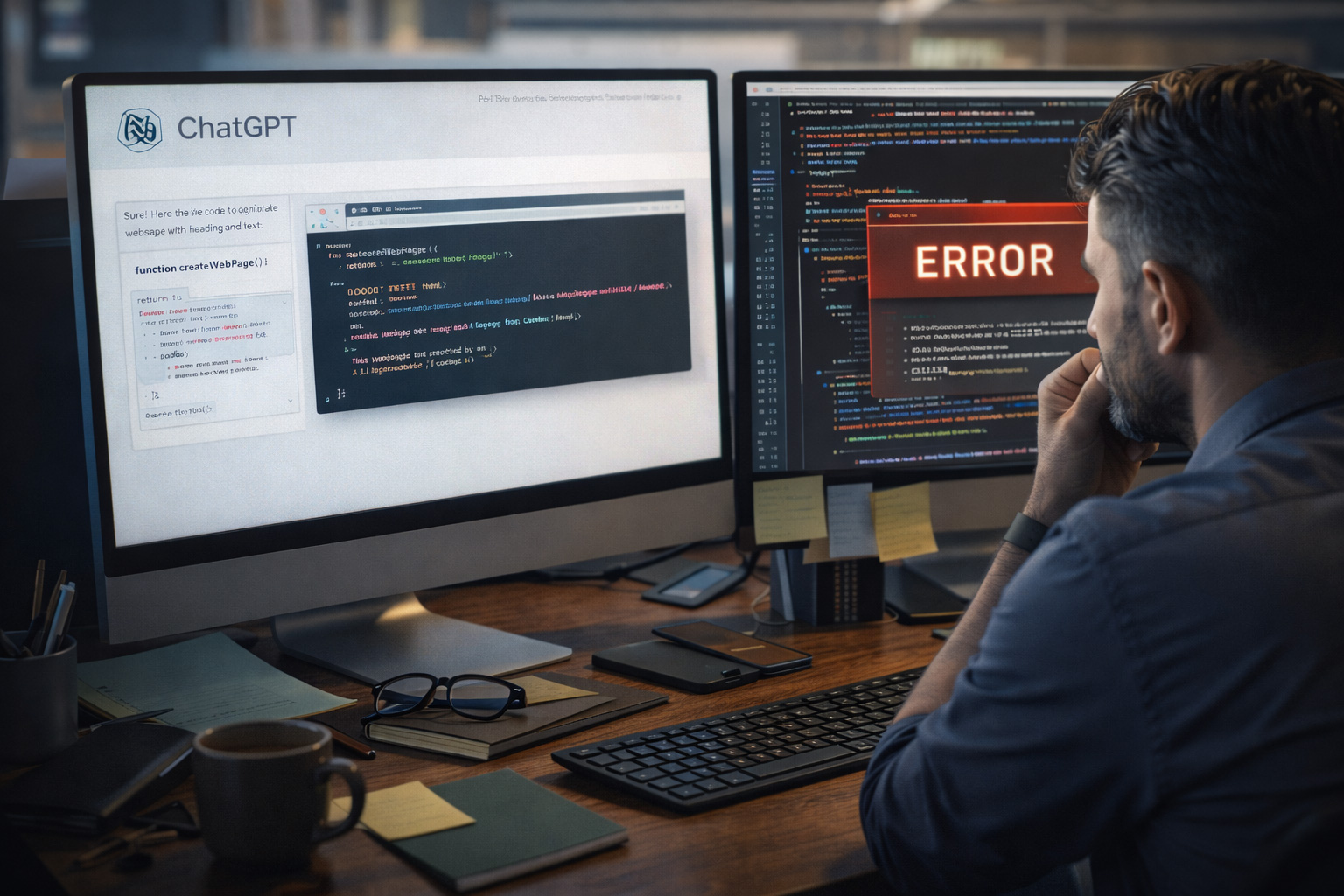
“Vibe coding” is having a moment.
It usually looks like this: you describe what you want, an AI generates code, you copy paste, it kind of works, and you keep going until you have something that looks like a product. For prototypes, landing pages, internal tools, and quick experiments, that can be awesome.
The problem is what happens next.
If the project becomes real (customers, payments, SEO, integrations, performance, security, uptime), the same “move fast” approach can quietly turn into the most expensive phase of the whole product: fixing the parts that were never designed to survive.
This article breaks down:
- what vibe coding is good for (and what it is not)
- the hidden costs that show up later
- a simple checklist to decide if you should DIY or bring in experienced developers
- how a dev team like CODO fits in without killing speed
If you want a quick opinion on your specific project (what is safe to vibe code vs what needs engineering), you can reach us here:
https://codo.ltd/contact/
What is vibe coding, really?
Vibe coding is AI-first building where the main workflow is:
- prompt the AI
- accept the output
- adjust by prompting again
- glue pieces together until it runs
It is not the same as “using AI to help you code.” Experienced developers use AI too, but they still do the core engineering work: architecture, review, tests, security, performance, maintainability.
The difference is simple:
- vibe coding optimizes for “it works right now”
- production engineering optimizes for “it keeps working later”
The honest pros of vibe coding
Vibe coding is not bad. It is just limited.
1) Fast prototypes
You can go from idea to demo in hours.
2) Great for learning and exploration
It helps non developers explore an idea without waiting for a team.
3) Useful for low risk tools
Internal dashboards, one-off scripts, small utilities, automation helpers.
4) Helps you clarify requirements
Even if the code is throwaway, building something quickly can reveal what you actually need.
If your goal is a proof of concept, vibe coding can be the right move.
Where vibe coding becomes expensive
Here is what we see most often when someone brings an “AI built” project to professional developers later.
1) The code works, but nobody can explain it
This is the biggest hidden cost.
When a site breaks or needs changes, you need to know:
- where the logic lives
- what depends on what
- what can be changed safely
- what will break checkout, SEO, caching, or login
In vibe coded projects, the structure is often accidental. It is a patchwork of generated solutions that were never designed together.
Cost outcome: changes take longer, bugs repeat, and every update feels risky.
2) Security is an afterthought
AI output often looks correct but can miss important security details:
- input validation and sanitization
- permission checks
- secure file handling
- safe authentication flows
- safe API key storage
- prevention of common injection and escalation issues
If the project touches WordPress, WooCommerce, user accounts, payment flows, or private data, security is not optional.
Cost outcome: expensive cleanups, downtime, lost trust.
3) Performance death by a thousand cuts
A project can feel “fine” during development and become slow when real users arrive:
- too many database queries
- unbounded loops or heavy operations on page load
- front end bundles that keep growing
- plugins and scripts fighting each other (common on WordPress sites)
- no caching strategy, or caching that breaks personalization
Cost outcome: slow sites, lower conversion, higher hosting bills, constant firefighting.
4) No tests, no safety net
When there are no tests, every change is a gamble.
That is why vibe coding often leads to a brittle product: you are afraid to touch it because you cannot prove it will still work after edits.
Cost outcome: slower iteration, more bugs in production, lost weekends.
5) Integrations become fragile
Marketers and store owners rely on integrations:
- payment gateways
- shipping
- CRM
- analytics
- email marketing
- product feeds
- automation tools
AI built code can connect to an API, but production integrations need:
- retries
- idempotency (avoid double charges, duplicate orders, repeated emails)
- logging and monitoring
- graceful failures
- secure webhook handling
Cost outcome: silent revenue leaks and painful debugging.
A simple decision checklist: is vibe coding OK here?
Use this rule of thumb:
Vibe coding is usually OK when:
- it is a prototype or demo
- it is not handling payments or personal data
- downtime would not hurt the business
- the code can be thrown away later
- you are fine with “good enough” quality
You probably want production engineering when:
- it is a WordPress site that must stay stable and updatable
- it is WooCommerce or any store
- it has logins, memberships, or user generated content
- it must rank in search and stay fast
- it uses multiple integrations and tracking scripts
- you need to hand it off to a team or maintain it for years
If you are unsure, that is the normal spot to get a second opinion:
https://codo.ltd/contact/
The middle path that works: “AI speed with engineering guardrails”
A good dev team does not need to be anti AI. The best approach is usually:
- use AI to move faster on repetitive work
- keep human engineering for decisions that matter
Here are the guardrails that turn “AI built” into “production ready”:
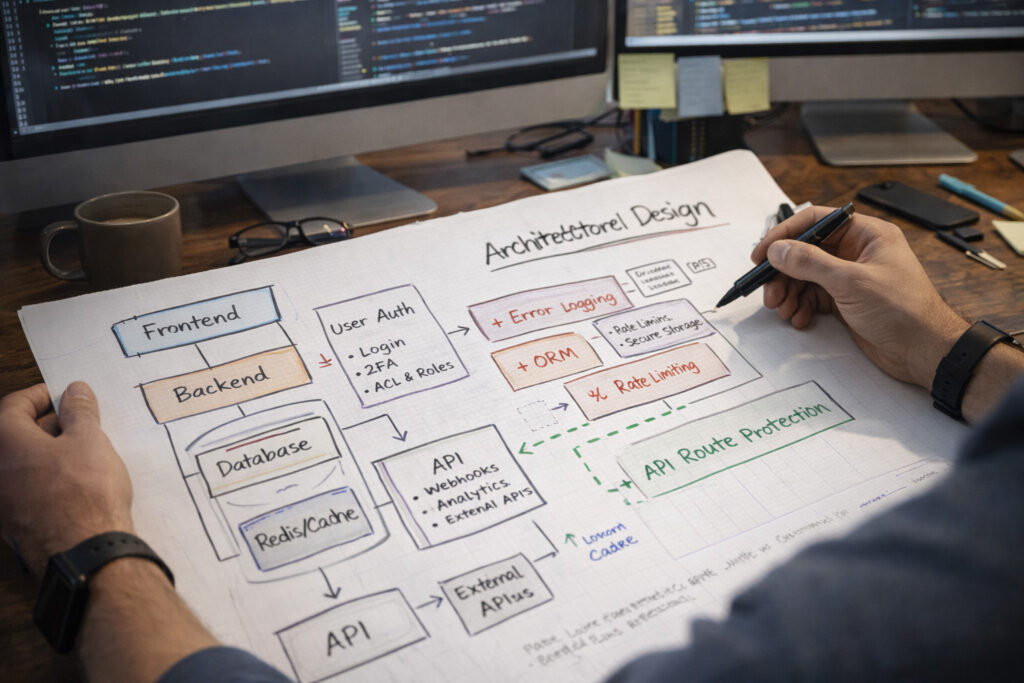
1) Clear architecture before writing code
This means deciding:
- what lives where
- how data flows
- how things are configured
- how errors are handled
- what gets logged and monitored
This prevents “one more prompt” from turning into a tangled mess.
2) Code review as a habit
Generated code should be reviewed like code written by a junior developer:
- does it follow your standards?
- is it secure?
- is it maintainable?
- is it consistent with the rest of the system?
3) Testing the critical paths
Not every project needs perfect test coverage. But most real projects need tests around:
- checkout and payments
- login and permissions
- key forms and conversions
- integrations and webhooks
4) Performance and stability work early
Especially for WordPress and WooCommerce:
- plugin audit (remove or replace risky/bloated plugins)
- caching strategy
- database query health
- script management (third party tags often cause lag)
5) A maintenance plan
Production is not a finish line. It is a phase.
A reliable plan includes:
- updates
- monitoring
- backups (and occasional restore tests)
- security hardening and access control
- a way to respond quickly when something breaks
If this is the kind of ongoing reliability you want, that is exactly where a team like CODO can help without turning the project into a long slow process:
https://codo.ltd/contact/
Common scenarios (and the best move)
“I have an AI built MVP that works, now I want to sell it”
Best move: keep the UI and user flow, but do an engineering pass:
- simplify structure
- secure the system
- add monitoring
- fix performance bottlenecks
- add tests around money and authentication
“I want to build a WooCommerce store quickly”
Best move: vibe coding can help with content and layout ideas, but store setup needs engineering:
- performance and stability
- plugin choices
- payment, shipping, tax configuration
- staging and safe updates
“We are a marketing team and just need a landing page”
Best move: vibe coding can be enough, but watch:
- performance
- tracking scripts
- form security
- spam protection
If the page becomes a core revenue channel, you will eventually want a developer to harden it.
FAQ (SEO friendly and practical)
Is vibe coding bad?
No. It is great for prototypes and low risk builds. It becomes risky when the project needs to be reliable long term.
Can AI generate secure code?
Sometimes, but you should not assume it did. Security is about edge cases, context, and consistency. That is why review and hardening matter.
What is the fastest way to turn an AI prototype into a real product?
Treat it like a first draft:
- keep what is useful
- refactor what is risky
- add guardrails (architecture, tests, monitoring)
Will hiring developers slow everything down?
It can if the team is not pragmatic. A good team keeps momentum by focusing on the high risk parts first and leaving low risk parts flexible.
A calm next step
If you are building with AI and things are moving fast, that is a good sign. The goal is not to slow you down. The goal is to make sure the thing you are building can survive success.
If you want a quick, developer-level review of your project and a straight answer on what is safe to keep and what should be rebuilt, reach out here:
https://codo.ltd/contact/